


Why Your Sports Cards from the Early 90s Are Worthless
It's a familiar scene in sports card shops: someone walks in enthusiastically with a faded box or two under their arms. They confidently toss them on the glass display case, look up at the card shop owner and ask, "How much'll you give me for these?" expecting high sports card values.
Seeing the mix of Fleer team logo stickers and Upper Deck holograms tattooing the box, the shopkeeper knows the customer won't be leaving the store happy or with a newfound wad of cash. But he opens the box anyway, out of courtesy.
Before the shop owner even has a chance to take a handful of cards out, the customer amps up the sales pitch, "I've got tons of Hall of Famers in there. That Nolan Ryan where he's wearing the tuxedo; I've got two of them. Same with the Upper Deck card where there's three pictures of him."
Those were some great cards back when they were first released, but they aren't going to put anyone through college today, let alone buy a ham sandwich. Sports card values from the late 1980s and early 1990s are pretty much worthless, with some notable exceptions.
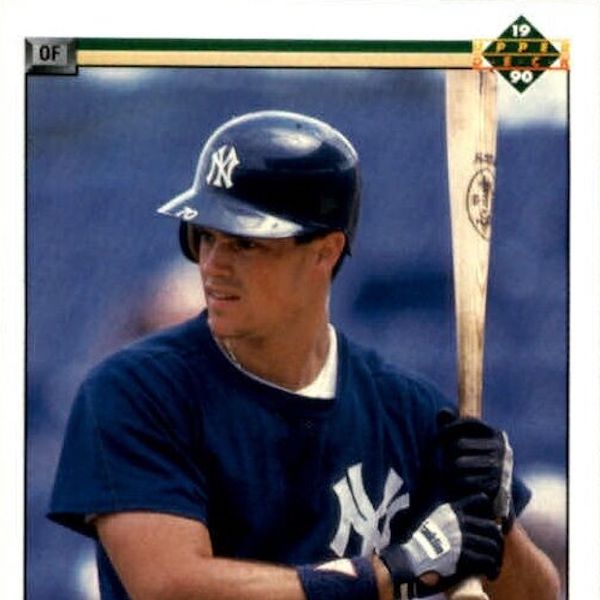
The shop owner continues to thumb through the cards politely as the collector, now completely overcome with visions of forthcoming riches, points out can't-miss rookies like Greg Vaughn, Gregg Jefferies and Kevin Maas.
"I know some of them didn't quite pan out, but they should be worth a little something still, right?" asks the collector.
Nope.
As the shop owner nears the bottom of the stack, the collector reaches in and grabs one card. "This card is awesome! Check it out, Michael Jordan taking batting practice with the White Sox. The last time I looked in a price guide, these bad boys were selling for $20. Same with the Dream Team Jose Canseco."

The collector knew his stuff. The only problem was, the last time the 1991 Upper Deck Baseball Michael Jordan sold for more than a dollar or two was back when Saved by the Bell was still on the air and Reebok was rocking the Foot Locker with pump shoes.
The shop owner carefully puts the cards back in the box and thanks the customer for bringing them in.
"So, what can I get for them?" the collector asks.
"Sorry, I can't use them."
"What do you mean?"
"I've already got more than I can use."
"But I paid a lot for these cards back in the day."
"I understand. So did I. But they're not worth much anymore."
"How much?"
The dance goes back and forth for a couple of minutes. The shop owner just wants to tell the guy that if he wanted to get rid of the cards, he might as well use them for kindling. But he holds back and continues to try and let him down nicely and educate him about real-world sports card values. The collector is shocked and can't understand it. For all these years, he's been careful to keep the corners sharp and not creased.
But the fact is, very few sports cards from the late-1980s through to the early-1990s have much value. In fact, many are hard to give away today. But not all hope is lost for those looking to cash in on their sports card stashes from the era.
Supply and Demand 101
To put it bluntly, everyone who wants a 1991 Upper Deck Baseball Michael Jordan has three of them. Even if they were just one per box, tons are out there. Literally. Today, they can be found for pennies on the dollar. This is the same with almost every sports card made between 1986 and 1992.
When sports cards began to emerge as collectibles, more people started to buy in. Soon after that came price guides, which placed specific values on collections. The hobby then enjoyed exponential growth. Everyone was suddenly dreaming of Jose Canseco and Todd Van Poppel cards working like stocks. Sports card values were supposed to see steady climbs, eventually culminating in cashing in for college tuition, new cars and lavish weddings.
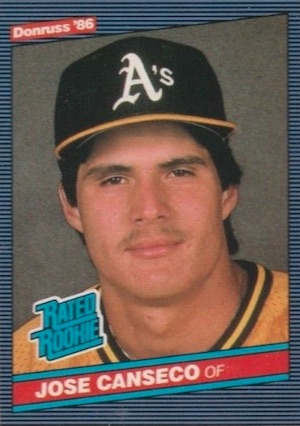
Baseball cards of a shirtless Jose Canseco were worth $20 or more. Heck, 1986 Donruss Jose Canseco cards were going for more than $100. The 1991 Upper Deck Baseball SP1 Michael Jordan was selling for $25. But in this time of card shops on every corner, everybody was forgetting about one of the most basic rules of economics: supply and demand.
When millions of people were buying sports cards in the late-1980s and early-1990s, card companies had press runs to match. With few exceptions, there were always enough cards to go around. Collectors could easily buy single cards by the brick. You wanted 100 Todd Van Poppel rookie cards from 1991 Upper Deck for every member of your football team? No problem. Heck, you could get 500-card lots relatively easily.
It seemed like everyone was stashing sports cards and lots of them. Supply and demand were in line, so prices were strong.
The mass supply should have been a major tip-off that made the continuous growth of sports card value impossible. As the hobby hemorrhaged collectors, supply now far exceeded demand. The hordes of cards didn't disappear, they merely sat in closets for years, gathering dust.
Now many sports card collectors are looking to get something for their cards. They're nostalgic not so much for the players on the fronts of the cards but rather the rush of bumping elbows at card shows as they built equity for the future. The hobby was filled with investors and not collectors. That's not a knock on anyone's reasons for buying cards. We were all told that sports cards were easy money. Who's going to turn down easy money, especially when it was fun to collect.
Supply has long since caught up with demand. Pallets of unopened cases and shoeboxes of childhood collections are common. If you're looking to sell your late-80s and early-90s cards, you're not alone. The cards are worthless because nobody's buying.
Don't blame the card shop owner for not wanting them. They won't be able to sell them, so if they take them off your hands, they're merely adding to a potential fire hazard.
Modern Perspectives on Sports Card Values
Some of the only sports cards from the early-1990s to maintain any value are the 1991 Donruss Elite inserts. The first serial-numbered cards in the hobby, they were "limited" to 10,000 copies. Imagine, just 10,000 cards.

Today, cards limited to just one copy are fairly easy to find. And cheap, too. Cards limited to 100 copies are considered common and often sell for a dollar or two.
That's how much the hobby has shrunk. Twenty years ago, a print run of 10,000 was the pinnacle achievement. Today, superstar cards limited to just one copy can sell for less than the box they came in. This isn't always the case as some of today's cards can sell for hundreds or even thousands of dollars, but there aren't many.
There are several reasons for this, but it still comes down to supply and demand. Today's hobby base is a dedicated one, but you could measure them in the thousands and not the millions who were buying in 1990 and 1991, the peak of the hobby boom.
Not only were there millions of cards, but they were all meticulously looked after. Vintage Mickey Mantle cards remain valuable in part today because they were originally bought to be played with and studied. As cards gained collectible value, a new breed of collector emerged—one who looked after their cards as though they were a fragile antique. Recognizing the red borders of 1990 Donruss Baseball were easy to damage, we started putting them in pages and specially made boxes that made sure "mint condition" was maintained. So not only are there millions of early-1990s sports cards out there, they're all in great condition.
Finding Value in Your Worthless Cards
Not all hope is lost for those of you who have boxes and boxes of cards that aren't worth any money. You may not be able to cash in and take that vacation you were hoping for or even buy a textbook for your daughter's first semester at college, but some value can be found.
Several sets from the late 1980s and early 1990s are still very attractive sets. Okay, maybe not the hideous yellow of 1991 Fleer Baseball. But early Upper Deck sets are gorgeous. Rather than lamenting on false hopes, take out your cards and look through them. Admire the photography, the designs and player accomplishments. If you were a hardcore investor, this might have even passed you by 20 years ago in the rush to keep the cards in mint condition.

You may choose to get rid of some of the cards and only keep your favorite teams or players. Even then, who needs a brick of 1990 Upper Deck Kevin Maas cards? One will probably do.
At this point, you've got little to lose with your overproduced cards. The monetary sports card values aren't there. Enjoy the cards for what they are and don't get mad over what could have been. If you insist on freeing up space and your collection consists solely of cards from 1986 to 1992, don't bother taking them to your card shop unless you have rookie cards of Hall of Fame stars. Even then, prepare to be disappointed. Outside of a couple of exceptions like 1989 Upper Deck Baseball, 1989 Score Football, 1990 Leaf, 1991 Stadium Club Football and 1992 Bowman Baseball, you're still likely to be turned away.
And if you do take your cards from this era to be appraised, don't get mad at the guy behind the counter when he breaks it to you that the sports card values are worthless. Chances are, he's probably got a basement filled with them too.
 | Making purchases through affiliate links can earn the site a commission |







David LaMattina
So you are stating that cards from the early 90s hold no value at all whatsoever then how come it is that majority of the dealers online sale cards from the 90s have several boxes of unopened cards from the 90s packs even. Not one card hold any value truly do you believe that or maybe it is a lie you are simply wanting people to believe so that they will throw their crap away and everything that you have goes up in value it is a tactic isn’t it I think so seriously most people can’t afford $1,000 cards daily most people buy starter collections with low end cards why because when they decide they don’t want to collect them or they damage them they didn’t spend that much on them in the first place. But then again I love how everyone says apart from the ’80s for the 90s aren’t worth too much really because they were mass produced is that so then how come it is that my 1984 Donruss Don Mattingly rookie card PSA great at 9.0 holds value or for example Kobe Bryant’s jambalaya rookie card is worth how much even if it is graded authentic how much is it worth so my PSA GRADED 10.0 is worth how much. You know people who downplay cards from the early 90s or late too early 80s claiming they were mass produced and they hold no value are the same people who are claiming 1990 Donruss baseball cards with no period are an error card and it sells for a few thousand dollars on eBay just look at every card out there that is posted like that really it’s not worth anything but whoever said that that was an error too an error will be considered the Frank Thomas rookie card were it doesn’t have his name on the front that’s an error card. This no period after the word inc who’s to say that is a true identified error card show me one in history that has been graded by any one of these companies that says that that card is an error because it has no period. You can’t do it just like for example collx app says when you scan a card and add it to your collection when you scan that card and you say for example you place its condition in near mint condition that card potentially is only worth 10 maybe 15 cents whatever but that same card if you put it in good condition $3 if you put it in poor condition $15 why is it that that app would declare cards that are considered junk in your opinion to be worth more value than a card in gem mint condition. And how come it is that cards vintage cards I was told never ever have a player sign that card because it makes the card worthless and now all the sudden there is a value for a card that is signed at a baseball show or something of that nature why do you know how many sports athletes I could have had sign my cards in my lifetime thousands of them. Had I known there was going to be a value for that I would have done that but I was always told from the hobby shops not to have a card that was vintage to ever have any sports athlete sign because it damages the card. Just think about it he’s no longer alive today but I was friends with the brother of Ricky Henderson could you imagine how many cards I could have had signed and what they would be worth crazy right.