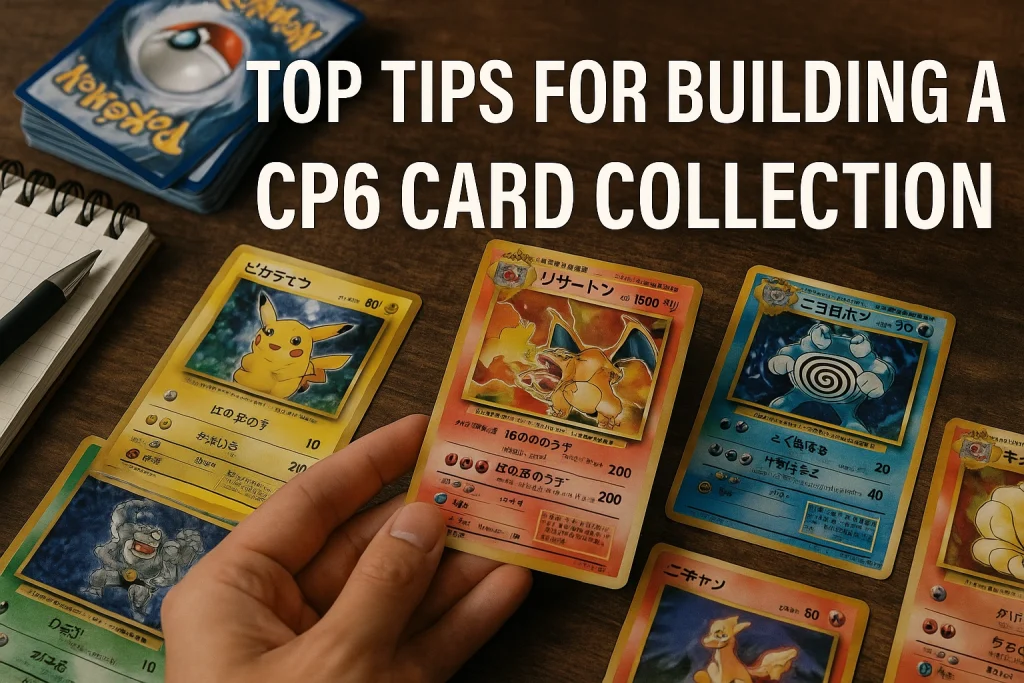
Chasing the perfect CP6 collection is equal parts strategy, patience, and market savvy. Whether you are upgrading from a starter binder or refining a focused set, you need more than nostalgia to guide your buys. The Japanese 20th Anniversary release rewards collectors who understand print quality, scarcity, and timing. That is where a clear plan, grounded in data and a reliable cp6 card list, becomes your best edge.
In this listicle, you will learn how to define a collection goal that fits your budget, how to prioritize cards with the best long term upside, and how to assess condition with confidence. We will cover smart sourcing across marketplaces, tips for spotting authentic copies, and when grading makes sense. You will see how to use a cp6 card list to track progress, identify undervalued targets, and avoid duplicates or impulse buys. By the end, you will have a repeatable process for building a CP6 collection that holds value, looks sharp in a binder or a case, and grows with the market.
Understanding the CP6 20th Anniversary Set
1. Origins and significance for collectors
Released in Japan on September 16, 2016, CP6, officially titled Expansion Pack 20th Anniversary, commemorates two decades of the Pokémon TCG with a faithful yet modernized return to the 1996 Base Set. The checklist spans 103 cards, including 87 standard cards, 13 secret rares, and 3 additional uncommons, making it a compact but curated celebration of the brand’s roots. For planning a focused chase, start by reviewing the full composition and rarity structure on resources like CP6 20th Anniversary card details. CP6 matters because it bridges eras, combining retro aesthetics with updated card frames and mechanics that resonate with both vintage and modern collectors. As sealed supply tightens and grading populations stabilize, CP6 provides a historically anchored entry point with measurable long-term demand.
2. Iconic reprinted cards to know
The headliners are reimagined versions of Base Set icons and new full arts. Charizard EX 090/087 features gold trim, a cinematic illustration with Magmar and Flareon, and high-display appeal, which helps explain its premium trajectory, as outlined in Charizard ex CP6 090/087 overview. Mewtwo EX 095/087 brings a bold full-art treatment and modern foil texturing that grades well when centering and surface are clean, see Mewtwo ex CP6 095/087 overview. Collectors also target Mew 029/087, Blastoise, Venusaur, and the secret rare lineup for a complete nostalgic spread. Actionable tip, prioritize clean holo surfaces and edges on CP6 holos, then send likely PSA 9 to 10 candidates for grading to maximize upside.
3. Why CP6 is highly coveted today
Nostalgia, scarcity, and grading premiums fuel demand. The 2026 market shows rising attention to graded assets, with examples like an M Charizard EX selling for about £700 in PSA 10, while popular species such as Gengar have approached the mid 300 dollar range. Sealed also commands a premium, with first edition CP6 boosters reported near the high five figures in yen. Practically, build a strategy around a targeted cp6 card list, acquire sealed from trusted sources, and focus on high-grade candidates of Charizard, Mewtwo, and key secret rares. This balance of nostalgia and measurable market momentum positions CP6 as a cornerstone anniversary set for long-term collectors.
Navigating the CP6 Checklist: Essential Cards to Acquire
1. Spotlight CP6 hits: Pikachu Full Art and Mew Hollow
For collectors building around the CP6 card list, two marquee targets anchor the set’s appeal. Pikachu Full Art delivers a modern, full-bleed take on an iconic character, combining nostalgic Base-era cues with contemporary finishes that track well in both raw and graded markets. Mew Hollow remains a perennial favorite thanks to its holo pattern and cross-era popularity, making it a safe cornerstone for long-term holding. Verify artwork variants and numbering against the official Expansion Pack 20th Anniversary card list to avoid confusion with later reprints or similar promos. When deciding between copies, prioritize strong holo clarity, minimal print lines, and centered borders, since CP6 grading outcomes can swing values significantly.
2. Decode rarity and pull rates before you rip
Exact CP6 pull rates were never published, but modern benchmarks help set expectations. Full Arts commonly land around one in 18 to 36 packs in comparable releases, while Secret Rares can be as scarce as one in 200 to 400 packs, according to this expected value and pull rate guide. Translating those odds, targeting Pikachu Full Art through sealed ripping has a materially lower probability than purchasing a single outright. Holofoils like Mew should be more attainable than Full Arts, yet premium copies without scratches or print lines remain uncommon. Use these ranges to model outcomes, for example, estimating cost per chase by multiplying pack price by expected packs per hit.
3. Prioritize acquisitions with a data-driven plan
Start with a checklist-first approach, then tier targets by budget and liquidity. Track recent raw and graded comps across the Japanese 20th Anniversary price guide, setting buy thresholds for each grade you would accept. Allocate budget in thirds, singles for confirmed chases like Pikachu Full Art, strategic trades or local deals for Mew Hollow upgrades, and a smaller reserve for opportunistic sealed if prices are favorable. For investment-grade copies, insist on third-party grading or submit high-quality raws yourself after scrutinizing centering, edges, and holo surface. Revisit tiers quarterly, since anniversary-era demand can shift quickly with market cycles and new grading population reports.
The Financial Side of Building Your CP6 Collection
Collectors mapping their CP6 card list often realize the real challenge is financial planning. With prices moving in 2026 and graded premiums widening, a disciplined approach can help you complete the set without overpaying.
1) Estimated costs to complete the set
Budget around 600 to 1,000 dollars to finish CP6 in ungraded condition, assuming patient buying. Commons and uncommons typically run 1 to 10 dollars each, with many staples available via current CP6 singles pricing on Shogun Cards. Holo rares and EX cards can range from 20 to 60 dollars for popular picks, with outliers higher. Secret rares often command 50 to several hundred dollars, as seen with Pidgeot EX SR reported around 312.50. Sealed product premiums also affect strategy, since individual CP6 sealed items have listed near ¥18,800 in 2026, pushing many collectors toward singles-first completion.
2) Challenges securing secret rares like Misty’s Determination
Secret rares present three hurdles. Pull rates are low, so cracking packs may be inefficient compared to targeted singles. Prices can be distorted by short-term speculation and hoarding, a pattern familiar across modern sets and discussed in this scarcity-driven pricing overview. Condition sensitivity adds another layer, because Near Mint raw copies and high-grade examples diverge sharply in price, and graded premiums for marquee CP6 hits like M Charizard EX have reached several hundred pounds at the top end. Expect Misty’s Determination to behave similarly, with steady demand and limited high-grade supply.
3) Budgeting tips for ongoing purchases
Set a monthly cap tied to an acquisition plan, for example 200 dollars until you complete all non-holos, then increase for secret rares. Prioritize affordable gaps first, then allocate a specific reserve for one high-impact SR each quarter. Buy singles instead of chasing boxes, and track sales data weekly to spot dips before restocks. Trade duplicates to offset costs, and predefine max bids to avoid impulse premiums. Reassess your target list quarterly as prices move, then adjust spend toward cards with persistent demand and low reprint risk.
Trade and Purchase Strategies: Completing Your Collection
- Buying multiple boxes, know the tradeoffs before you rip. Multiples increase your odds of landing CP6 chase cards and short prints, which can accelerate completion of your cp6 card list. The upside is real if you plan to trade duplicates, since extras can be swapped toward tougher hits or graded upgrades. The downside is cost concentration and duplication, especially with a premium set. For example, single CP6 20th Anniversary boosters have been listed around ¥18,800, so a multi-pack plan adds up quickly compared to buying key singles like Pidgeot EX 096/087 SR that has appeared around 312.50. If your target list is down to a few high-value cards, singles often beat sealed expected value; if you still need breadth across the checklist, sealed can make sense, especially if you plan to trade.
- Use online marketplaces with a plan, and protect your bankroll. Set saved searches with the exact card numbers, language, and condition you need, then compare recent sold prices rather than asking prices. When you bid, set a firm ceiling and account for shipping, grading fees, and taxes, since these can erase apparent bargains. Review seller feedback and photo clarity, and request back images for holo surfaces. As an example of how to vet a listing interface, review item details and seller ratings on platforms like Mercari listing pages and apply the same diligence when filtering for Pokémon CP6 singles. Track 2026 trends, such as Gengar cards nearing $364.70 and CP6 M Charizard EX hitting £700 in PSA 10, to prioritize acquisitions before they move.
- Leverage Cardboard Connection tools to work smarter, not harder. Use the Collectopedia to confirm card numbers, parallels, and release context, then build a wantlist by rarity and price target. Install our Toolbar for quick access to set info, reviews, and news so you can react to price spikes or grading premiums in real time. Reference our resources for shop directories and selling guides to turn duplicates from multi-box breaks into trade capital. Cross-check each incoming card against our set details to avoid variant mixups and to maintain condition standards. This workflow shortens your path to a complete CP6 run while keeping spend disciplined as the market shifts.
Preserving and Displaying Your CP6 Cards
1) Decide whether to grade your CP6 hits
Grading stabilizes condition and pricing, which matters in a volatile 2026 market. High end CP6 examples illustrate the gap. M Charizard EX in PSA 10 has sold around £700, while raw copies lag. Gengar prices near 364.70 dollars in recent tracking also reflect a premium for authenticated, high grade cards. If centering is within 55 to 45, surfaces are scratch free, and edges are clean, consider submission. Pre screen with a 10x loupe and strong raking light, then place cards in penny sleeves and semi rigid holders. For pros and cons, review this graded vs raw overview.
2) Store to maintain condition and value
For ungraded CP6, use inner penny sleeves plus top loaders or Card Saver style holders. File in acid free, side loading nine pocket pages if you display sets from the CP6 card list. Keep storage at 60 to 70 degrees Fahrenheit and 40 to 50 percent relative humidity, and add silica gel packets to boxes. Avoid PVC, direct sunlight, and attic or basement fluctuations. For graded slabs, stage in foam lined cases, upright, with separators, and inspect holders quarterly for cracks or clouding. Document serials and grades in a spreadsheet to track replacements and insurance.
3) Showcase without sacrificing preservation
Choose wall cases and stands with UV filtering acrylic to reduce fading. Limit exposure to eight hours of indirect light daily, and use LED strips set to 3000 to 3500 Kelvin. Rotate feature cards monthly, and keep sealed CP6 booster packs, often priced around ¥18,800, in UV boxes as display anchors. Build themed nine card layouts from your CP6 card list, such as Starters through evolutions. Create a digital gallery with 600 dpi scans, and back up images to cloud storage for easy sharing.
Market Trends and Future Potential of CP6 Cards
- Current trends affecting CP6 card values CP6 continues to benefit from 2026’s premium on nostalgia-driven products and high-grade slabs. Key singles show healthy performance, with M Charizard EX in PSA 10 recently achieving about £700, and the SR Pidgeot EX 096/087 commanding roughly 312.50 in the secondary market. Sealed also trends strong, with first edition CP6 20th Anniversary booster packs offered near ¥18,800, signaling robust demand for unopened product. Broader category momentum helps, as chase species like Gengar have climbed to around $364.70, reinforcing appetite for iconic characters. Actionable move, track population reports and auction comps weekly, then target price bands where PSA 9 and PSA 10 premiums compress, which can indicate near-term upside for higher grades.
- The impact of nostalgia on market demand CP6 reimagines classic Base-era artwork, and that connection is the set’s core demand driver. The current collector cohort, now in their 30s and 40s, is fueling the 25-year nostalgia cycle, which has lifted specialty and anniversary releases across the market. In 2025, nostalgia leaning products outperformed many standard expansions, with some sealed bundles in specialty lines rising more than 30 percent, underscoring the premium for memory-driven sets. For a practical playbook, prioritize flagship species and artwork nostalgia, then add one mid tier SR or Full Art per month to smooth cost basis. If building a cp6 card list on a budget, pre-screen raw copies for centering and print quality, submit only the cleanest candidates, and avoid overpaying for common non holos.
- Future considerations for investors and collectors Expect intensified activity around the franchise’s 30th anniversary in 2026, including price spikes and sharper volatility in CP6 chase cards. Grading will remain central to value, with third party slabs converting condition into verifiable assets and historically dominating submission volume. Plan entries around off-peak auction windows, set a max bid ladder per card, and keep a sealed versus singles ratio based on your time horizon. Monitor reprint narratives in modern sets, but treat CP6 as finite, which favors long term holding of top grades. Establish exit targets by grade and rarity, then revisit quarterly as comps and population data evolve.
Conclusion: Embracing the CP6 Collector's Journey
- Prioritize high-impact targets and plan your budget. Start with a ranked CP6 card list that centers on marquee hits and scarce variants, then allocate funds accordingly. Recent datapoints show how quickly value consolidates at the top, with M Charizard EX in PSA 10 selling for £700 and Gengar singles trending around $364.70. If you are working within a fixed monthly spend, commit a percentage to graded anchors and a portion to raw cards with clear upgrade potential. Keep a simple log that tracks purchase price, condition notes, and comps so you can course-correct as the market shifts.
- Be selective about sealed versus singles. With 1st edition CP6 booster packs priced near ¥18,800, ripping for chase cards can be fun but rarely the most efficient path to completion. Use checklists to target singles like Pidgeot EX 096/087 SR Foil, which has transacted around 312.50, and inspect centering, edges, and print lines before buying. When you do chase sealed, treat it as a diversification play and set strict stop-loss limits based on expected value. Always ask sellers for high-resolution photos and verify pack authenticity.
- Leverage grading to stabilize outcomes. The 2026 market rewards high-grade slabs, so pre-screen raw CP6 candidates with strong corners, minimal silvering, and clean holo surfaces. Store hits in semi-rigid holders, use pull tabs for submissions, and batch cards to reduce per-card costs. Compare expected grade premiums to submission fees to avoid negative ROI.
- Stay connected and use trusted resources. Engage with collector communities, track price guides, and watch population shifts for key CP6 cards. Explore our set database, checklists, release calendar, price comparisons, and how-to guides to validate decisions and spot timely opportunities.